Background
& experience

My work connects medical oncology, clinical AI research and software development. This page collects the clinical training, research collaborations and independent projects behind it.

Clinical work

Medical oncology training across Milan’s cancer centres and hospital wards.

Nov 2023 – present

Fondazione IRCCS Istituto Nazionale dei Tumori

Medical Oncology Resident, Milan

Thoracic oncology, immunotherapy and Phase I–III clinical research. Clinical activity includes approximately 20–30 patients per week in outpatient and inpatient multidisciplinary settings.

Work within a unit running approximately 15–20 concurrent trials, with involvement in screening, enrolment, informed consent, follow-up, SAE documentation and structured clinical data capture.
May – Oct 2023

IEO, European Institute of Oncology

Medical Oncology Resident, Breast Unit

Breast cancer care and Phase I–II trials, with exposure to dose-escalation strategies and safety data collection in early drug development.

May 2022 – Apr 2023

Ospedale Niguarda

Medical Oncology Resident, ward and GI oncology

Inpatient care, diagnostic reasoning and multidisciplinary management across internal medicine and gastrointestinal oncology. Developed the ward handover system detailed below.

Nov 2021 – Apr 2022

ASST Fatebenefratelli Sacco

Medical Oncology Resident, initial rotation

Ward-based care of patients with solid tumours. Participation in the regional COVID-19 vaccination campaign, including counselling, administration and safety monitoring.

Clinical documentation, Niguarda

Ward handover system

One shared workflow for 25 beds.

I replaced three mutually locking shared files with one document per bed, allowing ten physicians to update records in parallel. A master document assembled the ward’s 25 beds into a formatted handover.

Built in Word within the ward’s existing infrastructure, the system remained in use after my rotation.

Research collaborations & questions

Clinical research alongside an independent programme on AI evaluation and governance.

From clinical questions to system design

My clinical research includes cancer therapeutics, molecular profiling and the use of language models with oncology records. I collaborate with AI-ON-LAB on clinical NLP and LLM benchmarking, and contributed clinical data management to the CAVE-2 trial within the GOIM network.

My independent work asks how a clinical AI system can be evaluated, constrained and held accountable as its behaviour changes. These conceptual and methodological papers also inform the software I build.

Browse the complete research and writing record
Continuity & evaluation
The Narrative Continuity Test, NAT-Clinical and work on the limits of standard evaluation methods for clinical LLMs.
Governance & accountability
The CUL/TCL architecture, constrained oncology decision support and the attribution of responsibility in clinical AI.
How science is assessed
Work on evaluation incentives, scientific convergence and the assumptions used in LLM fairness research.

Software background

From earlier database projects to desktop applications and clinical workflow tools.

My current applications include Callimachus and an AIFA registry workflow tool. The projects below provide the earlier technical background.

Internal workflow tool, 2026

AIFA Registry Workflow Tool

Oncology registry workflow automation.

A Windows application for repetitive documentation in AIFA drug-monitoring registries and read-only reconciliation with MedWeb. I built it for internal use by oncology trainees, with record-level checks and direct operator control.

Workflows and implementation

CSV worklists drive prescription registration, reassessment and treatment-closure workflows. Cross-system checks identify dates or treatment records requiring review before they enter an operational queue.

Local run histories, HTML reports and interruption recovery keep completed and unresolved tasks separate. Operators can take over, resume or skip a case.

Python, Playwright, Tkinter, SQLite; Windows desktop distribution.

Earlier development and how I work

Writing code since 2013

I started at sixteen with a PHP/MySQL image-hosting component for a gaming fansite, including file validation and hash-based deduplication. During university I built a Node.js/PostgreSQL Discord bot with dynamic commands and per-user rate limits.

Development in practice

My current work combines Python applications, SQL databases and web infrastructure. I use AI-assisted coding with manual review, and manage remote development sessions through SSH and tmux, including from my phone.

Publishing & editorial work

Writing about research culture, and building the infrastructure to publish it independently.

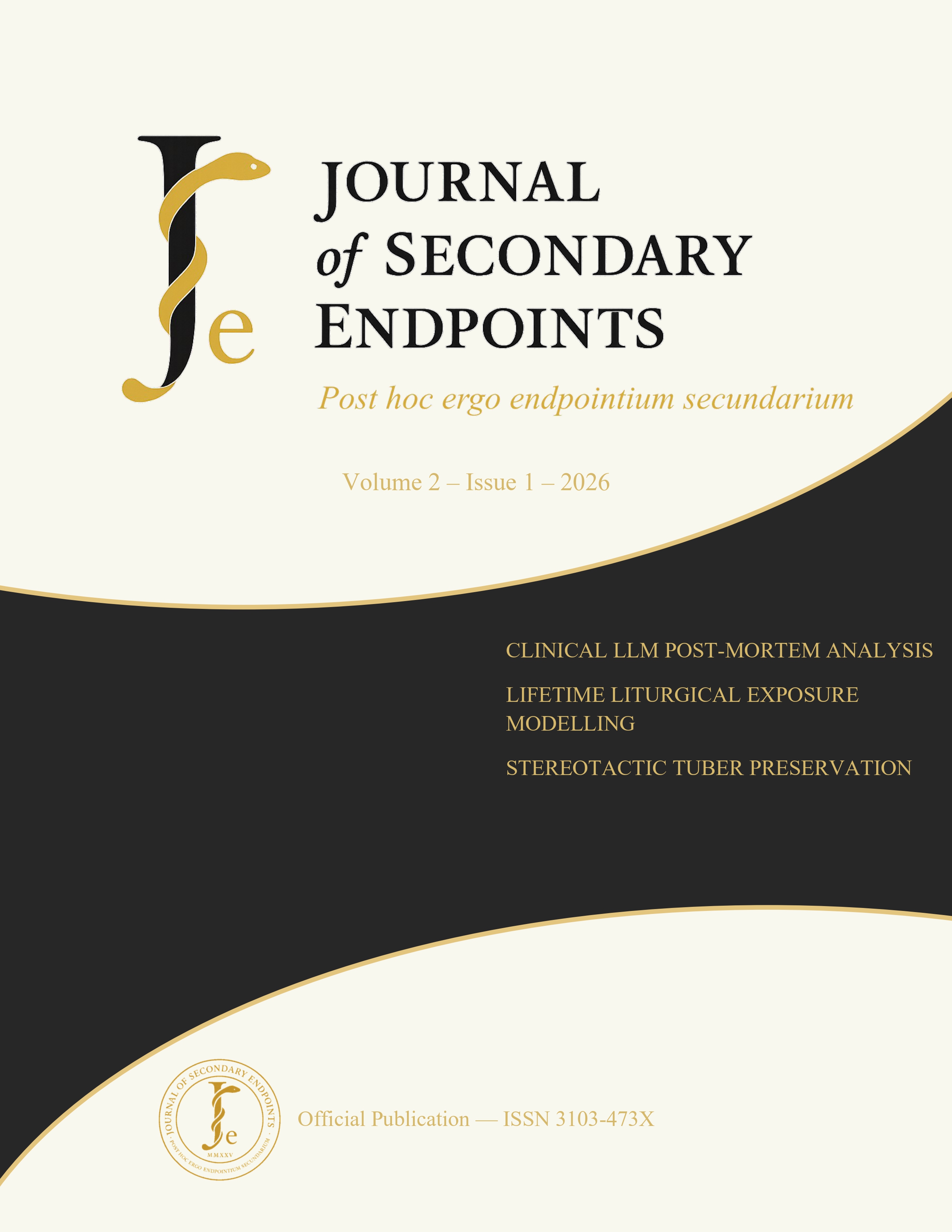
Journal of Secondary Endpoints, Volume 2, Issue 1, 2026 cover

Founder & editor-in-chief, since 2025

Journal of
Secondary Endpoints

An independent, diamond open-access journal exploring research culture through scientific satire. Its articles use academic formats to examine how evidence, publication incentives and evaluation shape medicine and science.

I manage the editorial process and the technical platform: journal policies, manuscript assessment, reviewer coordination, copyediting and publication, alongside the OJS installation and metadata workflows.

ISSN 3103-473X. Semiannual publication. No article processing charges.

JSENetwork

Founder & technical lead

A non-commercial initiative offering pro-bono OJS hosting for small, independent academic journals. The work covers installation, editorial workflows, metadata exposure and email delivery, with editorial responsibility retained by each journal.

OJS, PHP, DNS, OAI-PMH, DOI metadata, Amazon SES, SPF, DKIM and DMARC.

Visit JSENetwork

Peer review

I have reviewed manuscripts for BMC Medicine, Journal of Cancer Policy and The Oncologist (2023), Scientific Reports (2024), and BMJ Digital Health & AI (2026).

Commentary

Published comments and eLetters in JAMA, Science and BMJ Open address clinical AI oversight, commercial influence, medical training and oncology research.

Read the correspondence record

Education & background

The clinical, research and technical experience behind the work.

2021 – present

Specialist training in Medical Oncology

University of Milan

Postgraduate training in oncology, clinical research methodology and biostatistics. Expected completion in November 2026.

July 2021

MD, Medicine and Surgery

University of Milan

Experimental thesis on radiogenomics in NSCLC, integrating imaging features, tissue molecular profiling and liquid biopsy. The work included 130 retrospective patients and a prospective cohort of 72 patients.

Professional training includes Good Clinical Practice and Basic Life Support and Defibrillation (BLSD).

Tools & methods

Research
Clinical study methodology, evidence appraisal, structured data extraction, radiomics and molecular profiling datasets.
AI evaluation
LLM benchmarking, prompt evaluation, passage validation, provenance checks and audit trails.
Development
Python, SQL, SQLite, PostgreSQL, MySQL, Node.js, PHP, HTML, CSS and JavaScript. Desktop interfaces with PySide6 and Tkinter.
Publishing
Editorial workflows, OJS administration, web and email infrastructure, indexing metadata.

Professional memberships AIOM, ESMO and ASCO.

Languages Italian, native; English, professional proficiency (C2).

Beyond work

I have practised resistance training since 2009 and have a long-standing interest in exercise physiology, health behaviour and wearable technology, including early use of the Microsoft Band 2.